
Desktop Cable Tray Organizer solutions are transforming how modern offices and home workspaces eliminate cord chaos, boost productivity, and improve safety—all with surprising efficiency.
Key Takeaways
- Desktop cable tray organizers are linked to productivity gains and a measurable reduction in desk clutter and overheating risks.
- Proper installation and material selection are crucial for airflow, stability, durability, and real long-term value.
- Common pitfalls include inadequate sizing, poor ventilation, and compatibility issues with different desk types.
- What Is a Desktop Cable Tray Organizer and Why Use One?
- How to Install and Optimize Your Desktop Cable Tray Organizer
- Advanced Analysis and Common Pitfalls
- Conclusion
- FAQ
What Is a Desktop Cable Tray Organizer and Why Use One?
A desktop cable tray organizer is a device or tray mounted under or on your desk, designed to route, conceal, and support all the tangled cables, power strips, chargers, and wires that would otherwise clutter your workspace. Unlike cheap plastic clips, these trays provide robust support and organized routing—reducing accidental cable pulls, desk damage, and potential hazards from overheating cables piled together.

Cable organizers have shifted from afterthoughts to desk essentials as the demand for clutter-free, high-productivity work environments has exploded. The global under desk cable tray market reached $1.42 billion in 2024, driven by the need for more efficient, compliant, and safe workspaces. While industrial settings show dramatic gains—such as a 20% increase in cable capacity following optimized tray use—the logic applies to home and office desks as well. Improved airflow, easier cleaning, and protection from cord damage are all real-world benefits. Check out a kitsure desk organizer for enhancing confinement of wires alongside general office supplies.
How to Install and Optimize Your Desktop Cable Tray Organizer
Setting up a desktop cable tray organizer is simple, but a few deliberate steps will maximize results and prevent common headaches:
- Take Inventory. List all devices plugged into your desk—monitors, chargers, lamps, speakers, etc.—to estimate total cable volume and the tray size you’ll need.
- Choose Placement Carefully. Position your tray where cables naturally drop, without obstructing legroom or drawers. Under the rear edge is standard, but L-desks or standing desks may require creative mounting.
- Mount Securely. Use the correct screws or adhesive (if tool-free). Ensure the tray is rated for your cable weight. For best results, select ventilated trays to promote airflow and avoid overheating—proven to reduce energy consumption by 10% in cramped or misaligned trays.
- Sort and Route Cables. Bundle cables using ties or Velcro strips. Separate power cords from data/audio to reduce electromagnetic interference.
- Label Ends. Use labels on both cable ends—especially in multi-monitor or multi-device setups. This saves enormous time when unplugging or swapping hardware.
- Test and Adjust. Turn on all devices. Move your desk up and down (if adjustable) to check clearance and ensure cables glide smoothly.
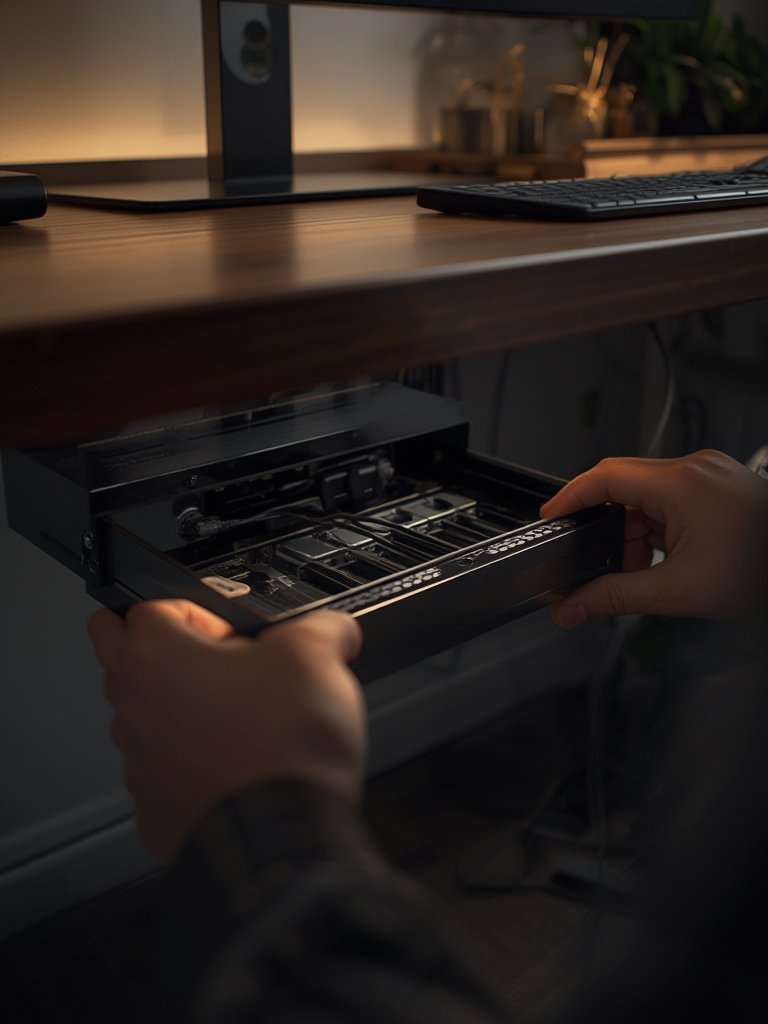
If you need additional desktop storage for office tools as you organize your cables, consider pairing your tray with a desk organizer with a pen holder. For those with compact setups, a folding computer desk with integrated cable management can save even more space.
Advanced Analysis and Common Pitfalls
While cable tray organizers are straightforward, there are pitfalls and advanced factors to consider if you want lasting, stress-free results.
Common Pitfalls
- Poor Ventilation. Solid trays without holes or mesh quickly become heat traps. Overheating cables can reduce efficiency and risk early cable failure. According to industry research, poor clearance increases energy consumption by up to 10%.
- Wrong Sizing. Overestimating the tray’s dimensions leads to wasted space and a clunky setup; underestimating results in overcrowded cables, which causes tangling and airflow issues.
- Flimsy Materials or Mounts. Cheap plastic trays or weak adhesive strips often sag or detach, especially on heavily loaded desks or adjustable sit/stand models.
- Limited Compatibility. Some trays do not fit thick desktops or desks with lip or beveled edges. Always measure your desk—and check for compatibility with standing desk types or L-shaped corners.
- Neglecting Modularity. Single trays are sometimes not enough for fast-growing setups. Modular systems or multi-tier organizers are helpful for gaming stations or dual-monitor offices.
Comparison Table: Tray Types for Desktop Use
| Tray Type | Ventilation | Typical Material | Install Method | Best Use Case |
|---|---|---|---|---|
| Ladder/Wire Mesh | Excellent | Metal (steel, aluminum) | Screw/Clamp-on | Gaming, multi-monitor, power users |
| Perforated | Good | Metal/Plastic | Screw/Adhesive strips | Standard office/home desks |
| Solid Bottom | Fair | Plastic/Metal | Screw/Tool-free | Dusty/humid environments |
| Modular/Multi-tier | Good | Metal/Plastic hybrid | Screw/Clamp | Expanding/IoT setups |
If you’re working in a creative field, improving workspace lighting is also effective—pair an organizer with an LED ring light for a cleaner look and brighter Zoom calls. For ergonomic comfort as you manage cables, choose a ventilated mesh ergonomic office chair.

Conclusion
A desktop cable tray organizer is more than a convenience—it’s a proven way to reclaim surface space, keep cords cool and safe, and boost your focus. Whether you work from home or in a creative studio, organizing your cables is a low-cost upgrade with outsized benefits. Pick the right organizer for your needs, check sizing and compatibility, and step confidently toward a smarter, safer desk setup.
Ready to transform your workspace? Choose your Desktop Cable Tray Organizer thoughtfully and enjoy a clutter-free, productive environment starting today.
FAQ
Are desktop cable tray organizers easy to install?
Most organizers take under 30 minutes to install and often require only basic tools or adhesive strips. For even faster tool-free assembly, look for trays designed for quick mounting or modular expansion.
Do cable trays work with all types of desks?
Not all trays are compatible with every desk. Measure your desktop thickness, look for beveled or curved edges, and check whether your chosen tray supports clamp, screw, or adhesive installation. Standing desks often need flexible cable management solutions.
Will cable trays overheat cables?
No, as long as you select ventilated or perforated trays and don’t overload them. Cramming too many power cables in a solid tray with no airflow can increase heat and waste electricity.
How do I choose between metal and plastic trays?
Metal trays are sturdier, handle more weight, and offer better ventilation. Plastic trays can be more affordable and lighter but may flex under heavy loads or break after repeated adjustments. Prioritize build quality for durability.
Can I use trays for both power and data cables?
Yes, but keep power and signal/data cables separated within the tray with ties or separate channels when possible. This reduces electromagnetic interference and makes troubleshooting simpler.